

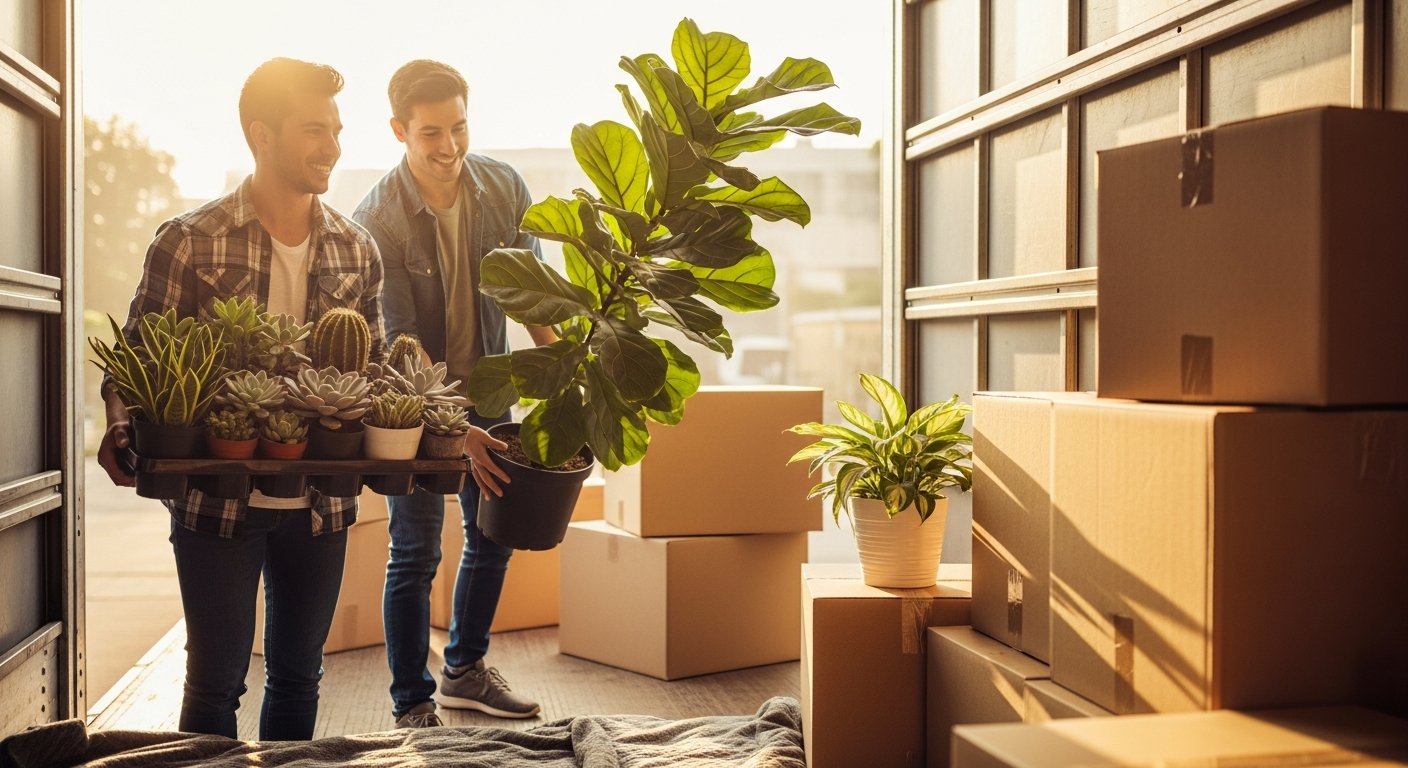
Your houseplants have survived your brown thumb phases, the drafty window in the living room, and that one time you forgot to water them for three weeks. Now you are asking them to survive a 1,200-mile truck ride. Moving plants across the country is one of the trickiest parts of relocation. Unlike a lamp or a sofa, a plant is alive. It needs light, water, temperature control, and protection from physical damage. If you pack it wrong or ignore state agricultural laws, you could arrive at your new home with nothing but a box of wilted leaves. Fortunately, with the right plan, you can keep your greenery thriving through the entire journey.
This guide walks you through every step: from checking legal restrictions to choosing the best packing method for each type of plant. Whether you are moving a single succulent or a jungle of fiddle-leaf figs, these strategies will help you get your plants to your new home in excellent condition.
Check Agricultural Laws Before You Pack
Many people skip this step and regret it later. Some states, particularly California, Florida, Oregon, and Arizona, have strict agricultural inspection laws designed to stop invasive pests and diseases from crossing their borders. If you drive through an agricultural checkpoint and cannot prove your plants are pest-free, officials may confiscate them. In extreme cases, you could face fines.
Start by searching for the specific regulations in your destination state. Look for terms like “plant quarantine” or “agricultural inspection.” Some states require a phytosanitary certificate, which is an official document from your state’s department of agriculture certifying that your plants are healthy. Obtaining one usually involves a home inspection by an agricultural officer. This process can take a week or more, so begin early.
- Search your destination state’s Department of Agriculture website for plant entry requirements.
- Check if houseplants are exempt from inspection (some states only restrict outdoor or soil-heavy plants).
- Contact the USDA Animal and Plant Health Inspection Service (APHIS) for federal guidelines if crossing state lines.
- Prepare to prune or bare-root certain plants if soil restrictions apply.
- Keep copies of any permits or certificates in your glove compartment for roadside checks.
If you are moving with professional movers, note that many moving companies will not transport plants due to liability and legal complications. You will likely need to move your plants yourself in your personal vehicle. For a deeper look at the legal side of transporting greenery, read our guide on how to move house plants long distance for additional compliance tips.
Prepare Your Plants for the Journey
A plant that has been watered normally and left alone will not travel well. You need to condition it for the stress of moving days before you even touch a box. Start about two weeks before your move date by gradually reducing watering. Moist soil is heavy and prone to mold in a closed box. Let the top inch of soil dry out before the move. For succulents and cacti, stop watering entirely a week before travel.
Pruning is equally important. Trim away dead or yellowing leaves and cut back leggy growth. Fewer leaves mean the plant loses less water through transpiration during transit. It also makes the plant more compact and easier to pack. Do not repot your plants right before moving. Fresh soil can shift and expose roots. Instead, keep them in their original nursery pots, which are lighter and more stable.
Pest Control and Health Check
Inspect every leaf, stem, and the top layer of soil for signs of pests. Look for spider mites (fine webbing), aphids (tiny green or black bugs), or mealybugs (white cottony clusters). If you find anything, treat the plant with insecticidal soap or neem oil at least a week before moving. A pest infestation that spreads to other plants or takes hold in your new home is the last thing you need after a long move. Healthy plants also have a much better chance of surviving the temperature changes and darkness of transport.
Choose the Right Packing Method for Each Plant
Not all plants pack the same way. A tall rubber tree needs a different approach than a trailing pothos or a spiky aloe. The goal is to protect the leaves, support the stem, and keep the root ball secure without crushing anything. Use the following guidelines for common plant types.
For small to medium plants (under 24 inches tall), a simple cardboard box works well. Line the box with a plastic bag to catch any soil spills. Place the pot inside, then fill the gaps around the pot with crumpled newspaper or packing paper. The pot should not shift when you gently shake the box. Cover the soil surface with a layer of paper or a coffee filter to keep dirt contained. For the foliage, wrap a paper cone around the leaves or use a paper bag to protect them from rubbing against the sides.
For tall plants (over 24 inches), you need a different strategy. Place the pot in a large, sturdy box and secure the pot at the bottom. Then, use bamboo stakes or dowels inserted into the soil to support the main stem. Gently tie the stem to the stake with soft plant ties or strips of pantyhose. Wrap the entire foliage section in a layer of kraft paper or an old sheet, leaving the top open for airflow. This prevents branches from snapping during sudden stops or turns.
For very large plants that cannot fit in a box, consider placing them in the front passenger footwell or the back seat floor of your vehicle. Secure the pot with a seatbelt or wedged between other items. Wrap the foliage loosely in a sheet to protect it from sun scald and drafts.
Control Temperature and Light During Transit
Plants are sensitive to extreme temperatures. A car interior in summer can reach over 130 degrees Fahrenheit, which will cook your plants in minutes. In winter, freezing temperatures can kill tropical plants just as fast. The best strategy is to move plants during mild weather if possible. If you must move in extreme conditions, take extra precautions.
In hot weather, park your vehicle in the shade whenever you stop. Crack the windows slightly to allow heat to escape. Do not leave plants in a closed trunk, as it traps heat. In cold weather, wrap the pots in bubble wrap or towels for insulation. Place them inside a cooler (without ice) to buffer against freezing. Bring plants into your hotel room overnight instead of leaving them in the car. The consistent temperature of a climate-controlled room is far safer than a freezing parking lot.
Plants need light to survive, but during a short move (one to four days), they can handle darkness as long as they are not left sealed in a black box for the entire trip. If you are using cardboard boxes, poke a few small air holes for ventilation. Unpack them as soon as you arrive and place them in indirect light. Do not put them in direct sunlight immediately, as they need time to readjust.
Water and Care During the Move
Overwatering is the most common mistake people make when moving plants. Wet soil is heavy, messy, and promotes root rot in a confined space. Water your plants lightly two to three days before the move, just enough to keep the soil slightly damp. Do not water them on moving day. During the drive, check your plants at rest stops. If the leaves look droopy, a light misting of water on the foliage can help. Do not pour water into the soil unless it is bone dry.
For multi-day moves, you may need to give your plants a small amount of water at the midpoint. Use a spray bottle to moisten the soil surface rather than drenching it. Keep a towel handy to catch any drips. The goal is to keep the plant hydrated without creating a soggy mess that invites mold.
Unpack and Recover Your Plants
When you arrive at your new home, unpack your plants first, before furniture or boxes. Remove all wrapping material carefully. Check for broken stems or damaged leaves and prune those away. Inspect the soil and the leaves for any pests that may have emerged during the trip. Give each plant a thorough watering if the soil is dry, but do not fertilize. Fertilizer stresses plants that are already adjusting to a new environment.
Place your plants in a spot with indirect light for the first few days. They need time to acclimate to the new humidity, light levels, and temperature of your home. Gradually move them to their permanent locations over the course of a week. Watch for signs of transplant shock, such as yellowing leaves or leaf drop. This is normal and usually resolves within two to three weeks. Do not repot your plants for at least a month after moving. Let them settle into their new environment first.
Moving plants long distance requires patience and careful preparation, but it is absolutely doable. By checking legal restrictions, packing each plant thoughtfully, and managing temperature and moisture during transit, you can bring your entire indoor garden with you. The effort is worth it when you see your favorite fern unfurling new leaves in your new home.