

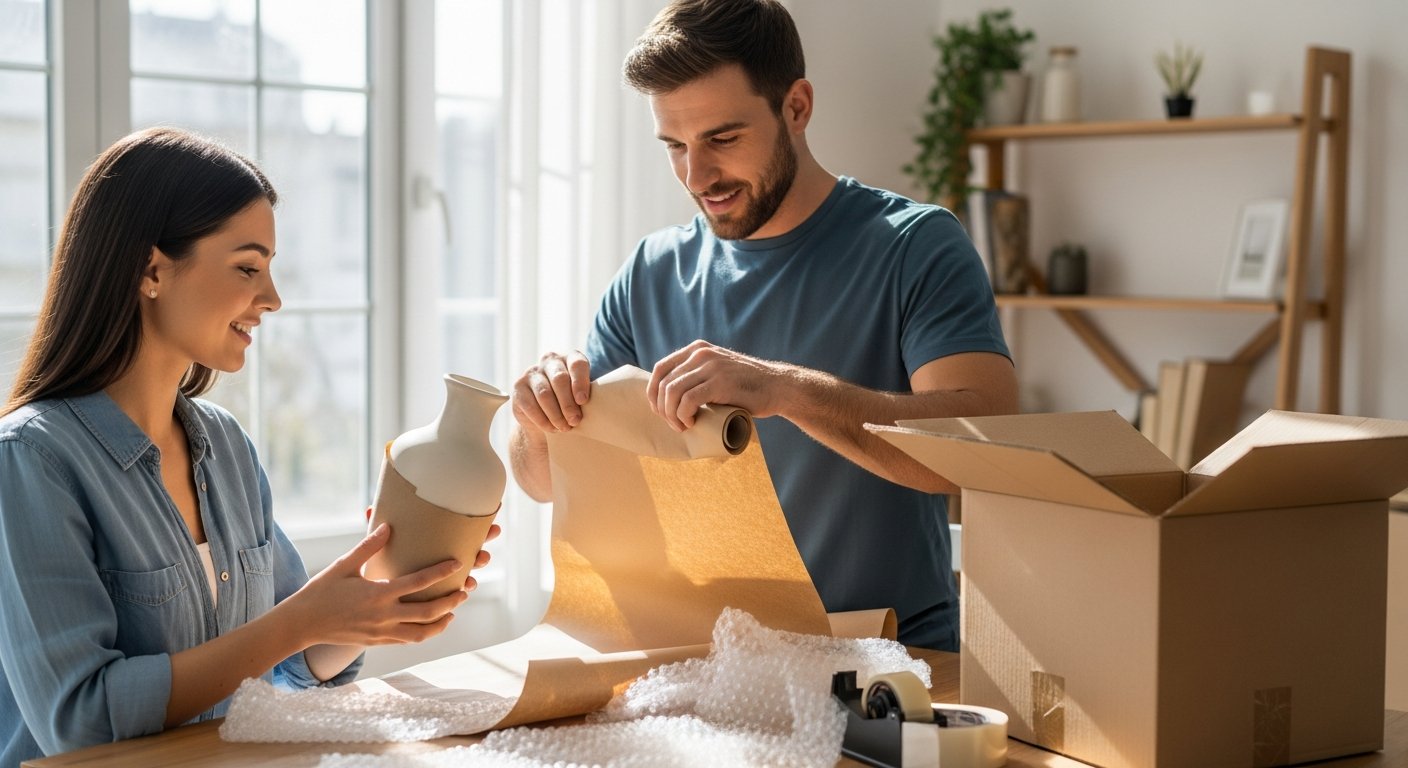
Nothing dampens the excitement of a new home like the sound of breaking glass or the sight of a cracked heirloom. You have invested time, money, and memories into your belongings, and the last thing you want is to unpack a box of shattered dishware. The difference between a stressful move and a smooth one often comes down to one critical skill: knowing the best way to wrap fragile items for moving. This guide delivers professional techniques that professional movers use to keep your valuables safe, helping you avoid costly replacements and the heartbreak of damaged treasures.
Why Proper Wrapping Matters More Than You Think
Many people assume that simply placing items in a box with some newspaper is enough. This approach often leads to disaster. Fragile items need a specific layering system that absorbs shock, prevents direct contact, and secures items in place. Without this system, objects shift during transit, bump into each other, and break. The cost of replacing a full set of china or a damaged piece of electronics far exceeds the investment in quality packing materials and a little extra time.
Furthermore, proper packing protects your financial interests. If you hire a moving company, the condition of your packed items can affect insurance claims. Many movers will not cover damage to items they did not pack themselves. By mastering the best way to wrap fragile items for moving, you gain control over the safety of your possessions and reduce the risk of disputes later. This process is not complicated, but it does require the right materials and a methodical approach.
Essential Materials for Wrapping Fragile Items
You cannot achieve professional results with substandard supplies. Before you begin, gather these key materials. Investing in the right tools is the first step in the best way to wrap fragile items for moving.
Bubble wrap is your primary defense against impact. It provides cushioning that conforms to the shape of your items. Purchase rolls with small bubbles for smaller items and large bubbles for bigger, heavier pieces. Kraft paper is excellent for wrapping dishes and glassware individually. It prevents scratches and adds a layer of compression. Avoid using newspaper, as the ink can transfer onto your items and leave stains.
Packing tape is essential for securing wrapping materials. Use a high-quality tape that will not dry out or fail. Dish packs or sturdy cardboard boxes specifically designed for fragile items are a must. These boxes have double-layered walls for extra strength. Finally, packing paper for void fill and markers for labeling complete your toolkit. Use the following checklist to ensure you have everything you need before you start:
- Bubble wrap (small and large bubble rolls)
- Kraft paper or clean packing paper (no newspaper)
- Strong packing tape and a tape dispenser
- Dish pack boxes (double-walled cardboard boxes)
- Furniture pads or moving blankets for large items
- Permanent markers for labeling
Having these materials on hand makes the wrapping process efficient and effective. Skimping on supplies is the most common mistake people make. A single roll of bubble wrap costs far less than replacing a broken vase. For eco-conscious movers, consider using towels, linens, or clothing as cushioning between wrapped items, which is a great way to save money and reduce waste.
Step-by-Step Techniques for Different Fragile Items
Not all fragile items are the same. The best way to wrap fragile items for moving depends on the shape, material, and function of the object. Here is a breakdown of how to handle the most common categories of breakables.
Wrapping Glassware, Stemware, and Fine China
Start by placing a sheet of kraft paper on a flat surface. Place the glass or dish in the center. Fold one corner of the paper over the item, tucking it in. Continue folding and tucking until the entire piece is covered. Then, wrap a layer of bubble wrap around the glass, securing it with tape. For stemware, gently stuff the bowl of the glass with a small piece of crumpled paper to provide internal support. Wrap the stem separately and then the entire glass.
Once individual items are wrapped, place them in a dish pack vertically, like records in a crate. Do not stack plates flat on top of each other. Instead, place them on their edges. Fill all gaps with crumpled packing paper. A box should be full enough that nothing shifts when you shake it gently. This vertical placement distributes weight evenly and prevents the bottom items from cracking under pressure.
Packing Electronics and Screens
Electronics require special care because they are sensitive to static and impact. Use anti-static bubble wrap if possible. For flat-screen TVs, never lay them flat. Always keep them upright. Wrap the screen in a soft moving blanket first, then secure it with stretch wrap. Use corner protectors made of foam or cardboard to shield the edges. Place the TV in a box specifically designed for its size.
Smaller electronics like laptops, tablets, and gaming consoles should be placed in their original boxes if you have them. If not, wrap each item in bubble wrap and place it in a sturdy box with at least two inches of padding on all sides. Remove batteries and cables, and pack cables separately in a labeled bag. This step prevents damage from loose cords and makes setting up your new home much easier.
Securing Mirrors, Artwork, and Picture Frames
Large flat items are prone to cracking and scratching. For mirrors and framed artwork, apply masking tape in an X-pattern across the glass surface. This holds the glass together if it cracks. Wrap the entire piece in kraft paper, then add a layer of bubble wrap. Use cardboard corner protectors to shield the frame edges.
Place the wrapped item in a mirror box or a box that is slightly larger than the item. Fill all empty space with foam peanuts or crumpled paper. Never stack multiple mirrors or pieces of art flat on top of each other. If you must stack them, place a sheet of cardboard between each piece and keep the stack vertical. The best way to wrap fragile items for moving is to treat each piece as if it were the only one in the box.
Labeling and Box Preparation for Safe Transport
Wrapping is only half the battle. How you pack the box and label it is equally important. Use strong, double-walled boxes. Reinforce the bottom with extra tape in a cross pattern. Do not overload the box. A good rule is that a box full of fragile items should be light enough to carry with one hand. If it is heavy, you have packed too many items.
Label every box clearly on multiple sides. Write the word “FRAGILE” in large letters and use arrows to indicate which side should face up. Write a brief description of the contents (e.g., “Kitchen: Wine Glasses”). This labeling helps movers and you know exactly what is inside and how to handle it. For extra protection, write “THIS SIDE UP” on the top of the box and draw arrows pointing upward.
Common Mistakes to Avoid When Wrapping Fragile Items
Even with the best intentions, people make errors that lead to breakage. One of the biggest mistakes is using too much space in a box. When there is empty space, items slide and collide. Always fill gaps completely with packing paper, bubble wrap, or soft items like towels. Another mistake is wrapping items too tightly. While you want a snug fit, excessive pressure can crack thin glass or bend delicate frames.
Do not mix heavy items with fragile ones in the same box. A heavy book placed next to a ceramic bowl will crush it during transit. Keep items of similar weight and fragility together. Finally, never assume that double-boxing is unnecessary. For extremely valuable or fragile items, place the wrapped item in a small box, then place that box inside a larger box with cushioning around all sides. This double-boxing method is the best way to wrap fragile items for moving when the item is irreplaceable.
Final Checks and Professional Moving Support
After you have packed all your fragile items, do a quick shake test on each box. If you hear movement, open the box and add more padding. Check that all tape is secure and that the boxes are not bulging. Bulging boxes are a sign that the box is too full or the items are not properly cushioned. Reinforce the seams with extra tape if needed.
Even with perfect packing, the moving process itself can be chaotic. That is why choosing the right moving partner is essential. When you work with professional, licensed, and bonded movers, you add a layer of security and expertise to your relocation. For a comprehensive overview of safe handling practices, refer to our guide on packing breakable items for moving safely. These professionals know how to handle boxes marked “FRAGILE” and can navigate stairs, tight doorways, and trucks without jarring your belongings.
Taking the time to wrap your fragile items correctly is an investment in peace of mind. It protects your belongings, saves you money on replacements, and ensures your new home feels complete from the moment you arrive. With the right materials, a methodical approach, and the help of reliable movers, you can move your most treasured possessions with confidence.