

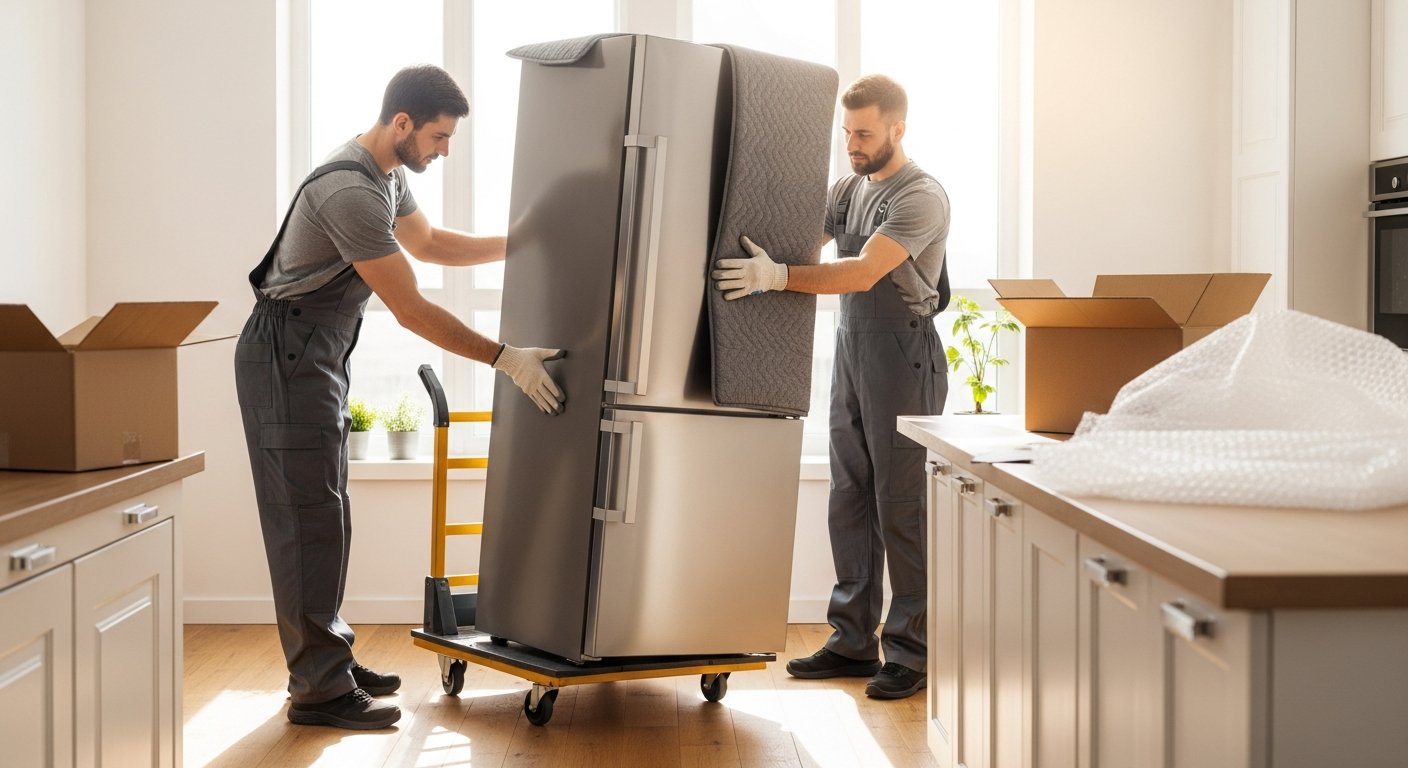
Your refrigerator is one of the heaviest, most expensive, and most delicate items you will ever move. A single wrong tilt can ruin the compressor, and a careless push can dent the doors or scratch your floors. The challenge is that you cannot just strap it to a dolly and roll it out the door. You need a careful plan that protects the appliance, your home, and your back. This guide walks you through the entire process, from preparation to reconnection, so you can learn how to transport a refrigerator without damaging it and avoid the cost of a premature replacement.
Why Refrigerators Need Special Handling
Refrigerators are not like other large appliances. They contain sealed systems with refrigerant under high pressure, plus a compressor that circulates the cooling fluid. If you lay the unit flat on its side, the oil from the compressor can flow into the refrigerant lines. When you plug it back in, this oil can cause a blockage, leading to compressor failure and an expensive repair bill. Many moving companies refuse to take refrigerators that have been laid flat, and manufacturers often void warranties if they detect this type of mishandling.
Beyond the mechanical risks, the exterior is prone to damage. Doors can swing open and bang against walls, and the thin metal panels dent easily. The interior shelves and drawers can shatter if they are left in place. A successful move depends on understanding these risks and preparing for each one. The effort you put into preparation will save you from the headache of a broken appliance and the surprise cost of a new one.
Step 1: Prepare the Refrigerator for Moving Day
Proper preparation starts at least 24 hours before the move. This timeline gives you time to empty the unit, defrost it, and let all the internal components dry. Rushing this process is the most common reason for water damage, mold growth, and unpleasant odors after the move.
Start by turning off the refrigerator and unplugging it. Remove all food and beverages, and take out every shelf, drawer, and bin. Wrap each removable part in packing paper or bubble wrap and place them in a sturdy, labeled box. This prevents them from sliding around and cracking during transit. It also makes the main unit much lighter and easier to maneuver.
Next, you must defrost the freezer. Open the doors and leave them open so the ice can melt naturally. Do not use a knife or ice pick to chip away at the frost, as you can puncture the interior lining or the refrigerant lines. While you wait, place towels around the base to absorb the water. Once all the ice is gone, wipe down the interior with a solution of baking soda and water to neutralize odors. Dry every surface thoroughly, including the door gaskets.
Secure the Moving Parts
After the unit is clean and dry, you need to secure the exterior. Tape the power cord to the back of the unit with strong packing tape so it does not drag on the ground or get caught on the dolly. Close the doors and secure them with moving straps or a few loops of strong tape. This keeps them from swinging open and damaging the hinges or the surrounding walls.
If your refrigerator has an ice maker or a water dispenser, you must disconnect the water line. Turn off the water valve behind the unit, disconnect the line, and drain any remaining water from the tubing. Failure to do this can result in leaks that damage the appliance and your floors. For extra protection, place a layer of moving blankets or large towels over the entire unit, securing them with tape. This padding will absorb any bumps or scrapes during loading.
Step 2: Gather the Right Moving Equipment
Having the correct tools makes the difference between a smooth move and a dangerous one. You need a heavy-duty appliance dolly or hand truck with a strap, not a regular furniture dolly. This strap will hold the refrigerator securely to the dolly, preventing it from tipping over as you navigate doorways and ramps. You also need several thick moving blankets, a roll of packing tape, and a pair of furniture sliders.
Here is a quick checklist of the essential supplies you should gather before you begin:
- Heavy-duty appliance dolly with a ratchet strap
- Moving blankets, at least four, to fully wrap the unit
- Strong packing tape, not painter’s tape, to secure the blankets
- Furniture sliders to protect your floors and ease movement
- A basic tool set to disconnect the water line and remove doors if needed
Do not attempt to move the refrigerator with just a couple of friends and a regular dolly. The unit is top-heavy, and the risk of it falling is too high. Investing in the right equipment is a small price to pay for protecting a valuable appliance and preventing serious injury. If you do not own an appliance dolly, you can rent one from most hardware stores for a small fee.
Step 3: Move the Refrigerator Safely Out of the House
Moving the refrigerator out of the kitchen is the most physically demanding part of the process. The unit is heavy, and you have to navigate tight corners, door frames, and possibly stairs. Always keep the refrigerator in an upright position. Never lay it on its side or back, as this can cause the compressor oil to migrate and damage the cooling system.
Start by sliding the refrigerator away from the wall so you can access the back and unplug it. Place furniture sliders under the front feet to protect your floors from scratches. With your helper, tilt the dolly back and slide the strap under the unit, then ratchet the strap tight around the body. The refrigerator should be firmly secured to the dolly before you even attempt to move it.
When you reach a doorway, measure the opening against the width of the refrigerator. If it is a tight fit, you may need to remove the doors of the appliance. This is a straightforward task that involves unscrewing the hinge covers and lifting the doors off their pins. Keep all the screws in a labeled bag and tape the bag to the back of the unit so you do not lose them. Always move the refrigerator upright, and never tilt it more than a 45-degree angle to get through a low doorway.
Step 4: Load and Secure the Refrigerator in the Truck
Once the refrigerator is at the truck, you need to load it with care. The ideal spot for a refrigerator is upright, in a corner of the truck, against the front wall. This position provides the most stability and support. If you must place it against a side wall, make sure it is fully upright and braced so it cannot tip over when the truck turns.
Place the refrigerator in the truck first if possible, so it is not crushed by heavier furniture. Use additional moving blankets to create a padded barrier between the refrigerator and any other items. The doors should be facing the side of the truck, not the back, to prevent them from being opened by shifting cargo. Secure the unit with heavy-duty straps that are anchored to the truck’s tie-down rings. The straps should be tight enough to prevent movement but not so tight that they dent the sides of the appliance.
Consider the Route and Weather
If you are moving during the summer, be aware that extreme heat can be hard on a refrigerator that is not running. The interior can get hot and humid, which may lead to mold growth if the unit is not perfectly dry. Similarly, in freezing temperatures, any residual water in the lines can freeze and expand, causing cracks. If you are moving a long distance, pack the refrigerator last and unload it first so it spends the least amount of time in the truck.
For long-distance moves, it is wise to work with professional movers who have the right equipment and experience. They know how to handle the weight and delicacy of the appliance. If you are coordinating the move yourself, you can still use a service like Moving Perfect to find licensed and bonded movers who can handle the heavy lifting and ensure your refrigerator arrives safely.
Step 5: Unload and Reconnect the Refrigerator at Your New Home
Unloading is just as important as loading. Carefully roll the refrigerator out of the truck, keeping it upright at all times. Navigate the dolly through the new home, using the same caution you did on the way out. Place the refrigerator in its final position, but wait before plugging it in.
It is absolutely critical to let the refrigerator sit upright for at least four hours, and ideally overnight, before you turn it on. This allows the compressor oil to settle back into the sump. If you plug it in too soon, you risk damaging the compressor. This waiting period is the single most important step to ensure your refrigerator works after the move.
Once the settling period is over, level the refrigerator by adjusting the front feet. This ensures the doors close properly and the compressor works efficiently. Reconnect the water line if you have an ice maker, and then plug the unit into the wall outlet. Turn on the power and listen for the compressor to kick in. Wait a few hours for the unit to reach its set temperature before you load it with food.
Check Your Moving Insurance for Damage Protection
Even with the best preparation, accidents can happen. Before you move, check your moving company’s insurance policy to understand what is covered. Basic coverage often provides minimal protection, sometimes only 60 cents per pound. This means a 200-pound refrigerator would only be covered for $120, which is far less than its replacement value.
To fully protect your appliance, consider purchasing additional full-value protection. This type of coverage ensures that the moving company will repair the item, replace it with a similar one, or pay you the full replacement cost if it is damaged. This is a wise investment for an expensive item like a refrigerator. If you are moving with a company from Moving Perfect, you can ask them about the insurance options available and choose the level of coverage that gives you peace of mind.
Moving a refrigerator is a heavy job, but it is not a mysterious one. By following these steps on how to transport a refrigerator without damaging it, you can protect your investment and avoid unnecessary stress. The key is to prepare the unit, use the right equipment, keep it upright, and give it time to settle before reconnecting it. For a smooth and safe relocation, consider getting a moving quote from Moving Perfect to connect with professional movers who can handle the entire process for you, just as they would for other delicate items like a pool table.