

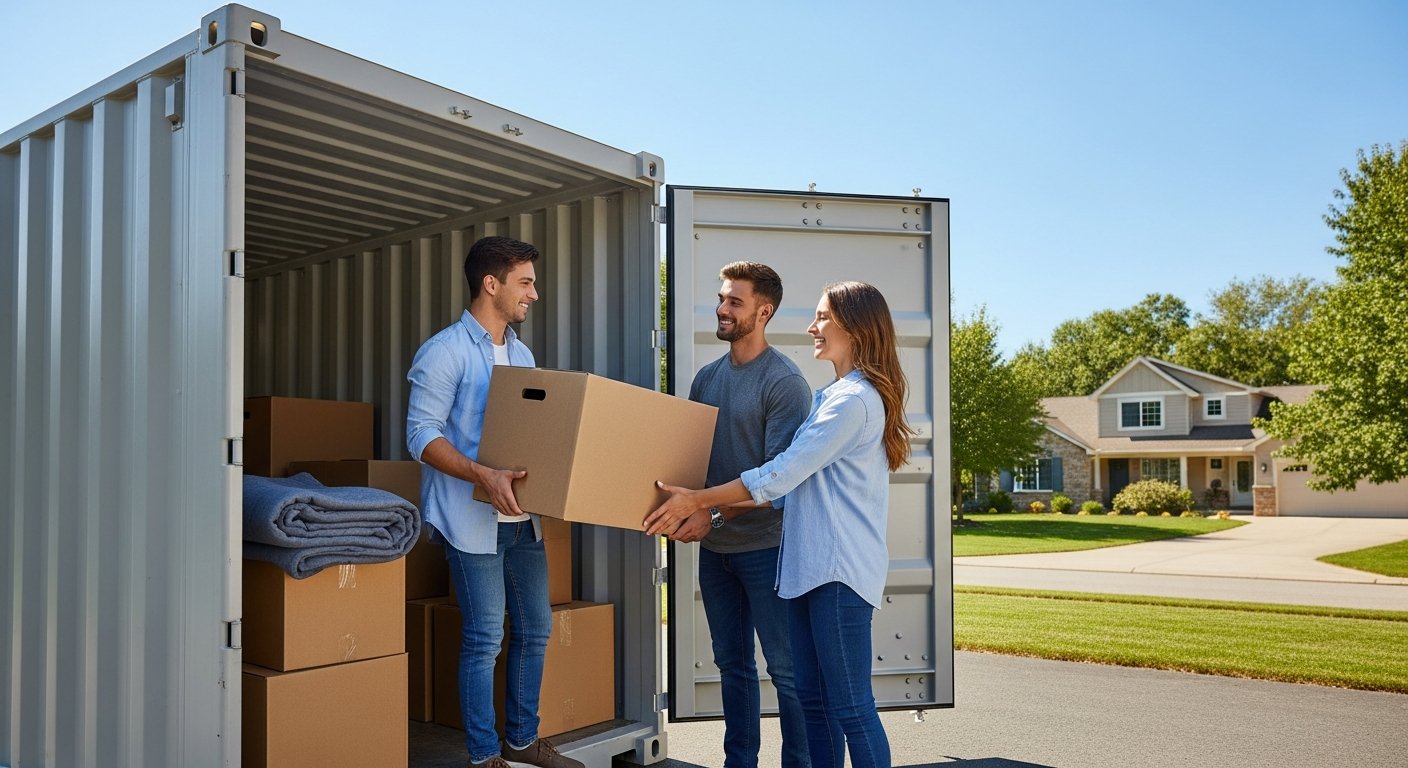
Moving day rarely aligns perfectly with your new home’s availability. You might face a gap of several days or even weeks between closing dates, or perhaps your new place needs renovations before you can move in. In these moments, scrambling for a place to keep your belongings can feel overwhelming. This is precisely where portable containers for short term storage during a move become an indispensable tool. They offer a flexible, secure bridge between two homes, allowing you to pack at your own pace and store your items safely until you are ready to receive them. Instead of rushing through packing or paying for a traditional storage unit that requires multiple trips, a portable container comes to you, simplifying the entire logistics chain.
The concept is straightforward: a company drops off a weather-resistant steel container at your current home. You load it on your own schedule, and the company either stores it at their facility or keeps it on your property until you are ready for delivery to your new address. This method eliminates the need to rent a moving truck for a single day and then immediately unload everything into a storage unit. For families coordinating a complex relocation timeline, these containers provide the breathing room needed to execute a smooth transition. Using portable containers for short term storage during a move not only protects your belongings but also significantly reduces the physical and mental pressure of a tight moving schedule.
How Portable Containers Solve Timing Conflicts
The most common reason people seek short term storage solutions during a move portable containers is a closing date discrepancy. You may be the seller of your current home, closing on a Tuesday, but the buyer of your new home does not close until the following Friday. Or perhaps you are renting, and your lease ends a week before your new apartment is ready. In both scenarios, you need a safe place for your furniture and boxes for a few days to a few weeks. A portable container is dropped off days before your move-out date, allowing you to load it gradually. Once your old home closes, the container is picked up and held at a secure storage facility. When your new home is ready, the container is delivered, and you unload at your leisure.
This approach offers a distinct advantage over traditional self-storage. With a standard storage unit, you must rent a truck, load it, drive to the facility, unload, and then repeat the process in reverse when moving in. That requires at least two separate truck rentals and a significant amount of additional labor. Portable containers consolidate this into a single load and unload cycle. You never have to drive a truck or handle your boxes twice. For those coordinating with professional movers, this synergy is powerful. You can hire a moving crew to load the container on your schedule, and then have the same or a different crew unload it at your new home later.
Key Situations Where These Containers Excel
Beyond closing date gaps, several other moving scenarios benefit from this flexible storage model. Consider a major home renovation. If you are moving into a house that needs new flooring or a kitchen remodel, you cannot bring all your furniture inside immediately. A portable container can sit in your driveway for weeks while construction is completed. You can access your belongings as needed without disturbing the work crew. Another scenario involves a job relocation where you must start work before your family moves. You can pack the container, have it stored, and live in temporary housing while your family finishes the school year before joining you.
Before you decide on a provider, it helps to understand what you are signing up for. Here are the core features that distinguish a quality portable container service:
- Weather-resistant construction: Steel containers with rubber seals protect against rain, snow, and humidity. This is critical for long-term storage of furniture and electronics.
- Flexible rental periods: Most companies offer weekly or monthly rates with no long-term commitment. This allows you to pay only for the days you actually need storage.
- On-site drop-off and pickup: The container is delivered to your driveway or street curb. You do not need to drive anywhere to access your items.
- Secure storage facilities: When stored at the company’s yard, containers are kept in gated, monitored lots to deter theft and vandalism.
These features make portable containers a superior choice for anyone who values convenience and security over the lowest possible upfront cost. While the per-day price is often higher than a traditional storage unit, the savings in labor, truck rental, and fuel often make it a more economical overall solution. Think of it as paying for time and simplicity rather than just square footage.
Comparing Portable Containers to Other Storage Methods
To fully appreciate the value of portable containers for short term storage during a move, it helps to compare them directly to the alternatives. The most common alternative is renting a traditional storage unit at a self-storage facility. With a storage unit, you are responsible for transportation. You must rent a moving truck, load your belongings, drive to the facility, and unload everything into the unit. When you are ready to move into your new home, you repeat the entire process in reverse. This involves at least two truck rentals, substantial physical labor, and the coordination of having the truck available on specific days. The total cost can quickly exceed the price of a portable container, especially when you factor in mileage fees and fuel costs.
Another option is using a full-service moving company that offers a storage-in-transit service. With this method, your movers load your items onto their truck, store them at their warehouse for a fee, and then deliver them to your new home at a later date. This is the most hands-off approach, but it is also the most expensive. You are paying for professional labor for loading, unloading, and storage. Furthermore, your access to your items is limited, often requiring a scheduled appointment and a fee to retrieve something. Portable containers strike a middle ground. You control the loading and unloading schedule, which saves money on labor, while still getting the benefit of secure, off-site storage without needing a truck.
Practical Steps for Using a Portable Container
Getting the most out of a portable container requires a bit of planning. First, measure your driveway or the street space in front of your home. Containers come in various sizes, typically 8, 12, or 16 feet long. You need enough clearance for the delivery truck to drop the container and later pick it up. Check with your city or homeowners association about any permits required for placing a container on the street. Many providers handle the permit process for you, but it is wise to confirm this in advance. Next, estimate the volume of your belongings. A common mistake is ordering a container that is too small. It is better to have a little extra space than to be forced to leave items behind or rent a second container.
When loading the container, use a strategic approach. Place heavy items like appliances and furniture at the front, near the doors. Distribute weight evenly across the floor to prevent shifting during transport. Stack boxes up to the ceiling, using the vertical space efficiently. Leave a small aisle down the center if you think you might need to access specific items while the container is in storage. Label all boxes clearly on the top and sides. When the container arrives at your new home, unload the items you need first, such as bedroom furniture and kitchen essentials. For those looking to protect high-value electronics, our guide on packing electronics for a safe move offers detailed techniques for wrapping and cushioning sensitive equipment.
One of the greatest benefits of this system is the ability to pack at your own speed. Instead of a frantic 48-hour packing window, you can take a week or more to fill the container. This reduces the risk of damage from rushed packing and lowers your overall stress levels. You can pack a few boxes each evening after work without the pressure of a looming moving truck deadline. This gradual approach is particularly helpful for families with young children or for households with a large number of fragile items that require careful wrapping.
Security and Protection of Your Belongings
Security is a primary concern when leaving your possessions in a container for days or weeks. Reputable portable storage companies use heavy-duty steel containers with a welded frame and a locking mechanism. You should always provide your own high-quality padlock, as the company’s basic lock may not offer sufficient protection. A disc lock or a shrouded padlock is far more resistant to bolt cutters than a standard combination lock. When the container is stored at the company’s facility, it is typically kept in a fenced, well-lit yard with video surveillance and regular patrols. Ask the provider about their specific security measures, including whether the yard is alarmed and if individual containers are monitored.
Weather protection is another critical factor. While containers are designed to be water-resistant, they are not completely waterproof in extreme conditions. If you are storing items that are sensitive to moisture, such as documents, photographs, or wooden furniture, take extra precautions. Use plastic bins instead of cardboard boxes for these items. Place silica gel packets inside the bins to absorb humidity. Avoid storing mattresses or upholstered furniture directly on the metal floor. Use pallets or a layer of cardboard to create an air gap. If you are storing the container during a wet season, consider placing a waterproof tarp over the top of your items inside the container before closing the doors. This adds a second layer of defense against any potential leaks around the door seals.
Finally, remember that insurance is your safety net. Your homeowners or renters insurance policy may provide limited coverage for items stored off-premises, but this is not guaranteed. Check with your insurance agent before the move. Alternatively, the portable container company may offer a damage waiver or valuation coverage for an additional fee. For high-value items like jewelry, art, or collectibles, consider a separate inland marine policy. Understanding your coverage before a loss occurs is far easier than trying to file a claim after something is damaged. When you compare quotes for your move, factor in the cost of insurance for the storage period. A small investment in coverage can save you thousands of dollars in the event of a theft, fire, or weather-related damage.
In the end, portable containers for short term storage during a move deliver a unique combination of flexibility, security, and convenience. They solve the logistical puzzle of timing gaps without requiring you to rent multiple trucks or make extra trips to a storage facility. By allowing you to pack and unpack at your own pace, they transform a stressful transition into a manageable process. Whether you are waiting for a closing date, finishing renovations, or staging a home for sale, this storage method keeps your belongings safe and accessible. As you plan your next relocation, consider this option to create a buffer that protects both your sanity and your possessions.