

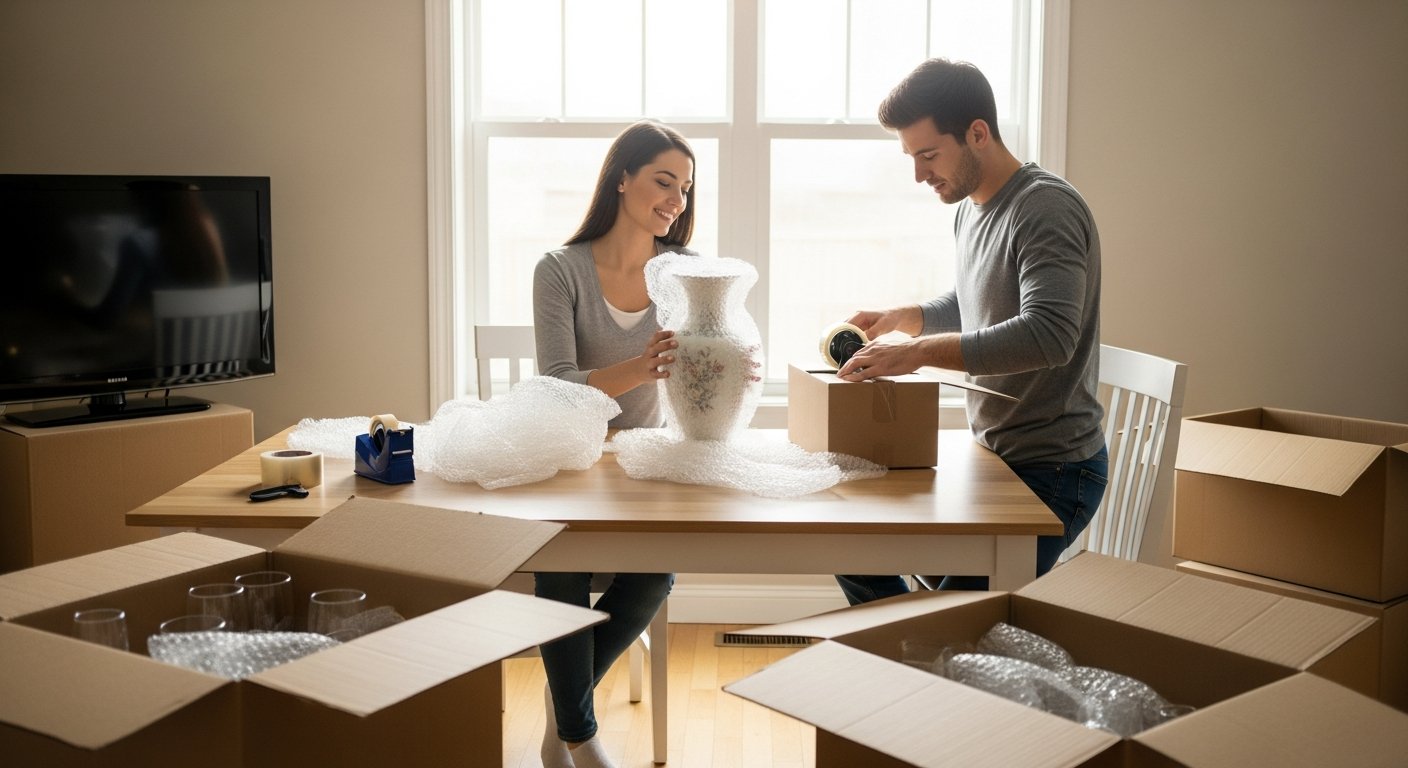
Moving day brings a familiar mix of excitement and stress, but nothing deflates the thrill of a new home faster than the sound of breaking glass from a poorly packed box. Whether it is your grandmother’s china set or a flat-screen television, fragile items demand a strategy that goes beyond tossing them in a cardboard box with a few sheets of newspaper. The stakes are high because replacement costs add up quickly, and sentimental value cannot be replaced. This is why understanding how to pack fragile items for moving correctly is one of the most critical skills you can develop before the movers arrive. By investing in the right materials and following a systematic approach, you can ensure that every delicate belonging arrives at your new home in one piece.
Why Proper Packing Matters for Breakables
Fragile items are particularly vulnerable during a move because they face multiple forces that can cause damage. Boxes get jostled in the truck, stacked under heavier items, and shifted during transport. Even the most careful professional movers cannot control every bump in the road. This is why your packing technique must act as the first line of defense. Using substandard materials or rushing through the process often leads to cracked glass, chipped ceramics, and dented electronics.
Beyond physical protection, proper packing also provides peace of mind. When you know that each item has been wrapped and cushioned correctly, you can focus on the other aspects of your relocation. Professional movers, such as those you can find through Moving Perfect, handle thousands of moves each year and expect your items to be packed securely. Taking the time to do it right not only protects your belongings but also speeds up the loading process because boxes are easier to handle and stack when they are properly packed.
Essential Packing Supplies for Fragile Items
Before you start wrapping anything, you need to gather the correct supplies. The quality of your materials directly affects how well your items survive the journey. Do not rely on old grocery bags or thin cardboard boxes that lack structural integrity. Instead, invest in purpose-built packing supplies that provide genuine protection.
Here are the core supplies you should have on hand:
- Double-walled corrugated boxes in various sizes. These boxes are much stronger than standard single-wall boxes and can support heavier loads without collapsing.
- Bubble wrap in both small and large bubble sizes. Small bubbles work well for delicate glassware, while larger bubbles offer cushioning for electronics and larger ceramics.
- Kraft paper or unprinted newspaper for wrapping and filling empty spaces. Avoid standard printed newspaper because the ink can transfer onto your items.
- Packing tape with a dispenser. Use at least two-inch-wide tape and seal all bottom seams with a crisscross pattern for extra strength.
- Furniture pads or moving blankets for oversized fragile items like mirrors, artwork, and glass tabletops.
- Stretch wrap or plastic wrap to secure loose parts and keep drawers or doors closed on furniture.
- Permanent markers and FRAGILE stickers for clear labeling.
Once you have these supplies ready, you can begin the packing process with confidence. Remember that the cost of quality materials is far less than the cost of replacing broken heirlooms. For more detailed guidance on wrapping techniques, read our guide on how to wrap fragile items for moving with professional methods that add an extra layer of security.
How to Pack Fragile Items for Moving: Step-by-Step
The process of packing fragile items is not complicated, but it does require patience and attention to detail. Follow these steps for each category of breakable item to maximize protection.
Packing Glassware and Stemware
Glassware is among the most challenging items to pack because of its thin walls and long stems. Start by placing a layer of crumpled kraft paper at the bottom of the box. Wrap each glass individually with bubble wrap, securing the wrap with a small piece of tape. For stemware, stuff the bowl with crumpled paper first, then wrap the entire piece. Stand the glasses upright in the box, placing them close together so they cannot shift. Fill any gaps with crumpled paper. Do not stack glasses on top of one another unless you place a thick layer of cushioning between layers.
Packing Plates and Bowls
Plates and bowls should be packed vertically, like records, rather than flat. This orientation distributes pressure more evenly and reduces the risk of cracking. Wrap each plate or bowl individually in bubble wrap or several layers of kraft paper. Place them side by side in a sturdy box that is not too wide. Fill the spaces between plates with crumpled paper. If you need to stack a second layer, place a flat piece of cardboard or an extra layer of bubble wrap on top of the first layer before adding more items.
Packing Electronics and Screens
Televisions, computer monitors, and other electronics require special care because they are sensitive to impact and static. If you still have the original packaging, use it. If not, wrap the item in anti-static bubble wrap and place it in a box that is at least three inches larger than the item on all sides. Fill the empty space with foam peanuts or crumpled paper. Do not place heavy items on top of electronics boxes, and label them clearly as fragile on all sides.
Labeling and Organizing Fragile Boxes
Labeling is not just a nice-to-have; it is an essential part of the packing process. Professional movers need to know which boxes require gentle handling. Use a permanent marker to write the contents and destination room on the top and sides of each box. Add large FRAGILE stickers or write the word in bold letters. Some movers also recommend marking the box with an arrow indicating which side should face up.
Organize your fragile boxes so they are loaded onto the truck last and unloaded first. This placement keeps them on top of the pile and away from heavy furniture. Create a separate inventory list for your fragile boxes so you can quickly verify that everything arrived safely. This list also helps when filing an insurance claim, should any damage occur despite your best efforts.
Common Mistakes to Avoid
Even experienced movers make errors when packing fragile items. Being aware of these common pitfalls helps you avoid them. One frequent mistake is using too much tape. While you want the box to be secure, excessive tape can make it difficult to open and may even weaken the cardboard. Another mistake is overpacking a box. A box that is too heavy is more likely to break open or be dropped. Keep each box light enough to lift comfortably, ideally under 40 pounds.
Another error is failing to cushion the bottom and top of the box. Items can shift during transport, and if the box is dropped, the impact travels through the walls. Always add at least two inches of cushioning material at the bottom and top of every fragile box. Finally, do not assume that professional movers will re-pack your items poorly. They handle thousands of boxes, but they cannot re-wrap items that were packed loosely at home. Your preparation determines their success.
When to Hire Professional Packers
Some people prefer to handle packing themselves to save money, but there are times when hiring professionals is worth the investment. If you own high-value antiques, large art pieces, or a collection of fine china, professional packers have the experience and materials to protect these items better than most homeowners can. They also carry insurance that covers accidental damage during the packing process.
Moving Perfect can connect you with licensed and bonded moving companies that offer full packing services. This option is especially valuable for long-distance moves, where items spend more time in transit and face more handling. If you decide to hire packers, you can still pack your everyday items and leave the delicate work to the experts. The peace of mind that comes from knowing your valuables are in skilled hands is often worth the extra cost.
Moving does not have to mean losing precious items to breakage. With the right supplies, a systematic approach, and a little patience, you can pack your fragile belongings with confidence. Every piece of bubble wrap and each strip of tape is an investment in a smooth transition to your new home. Take the time to do it right, and you will be rewarded with a move that is as stress-free as possible.