

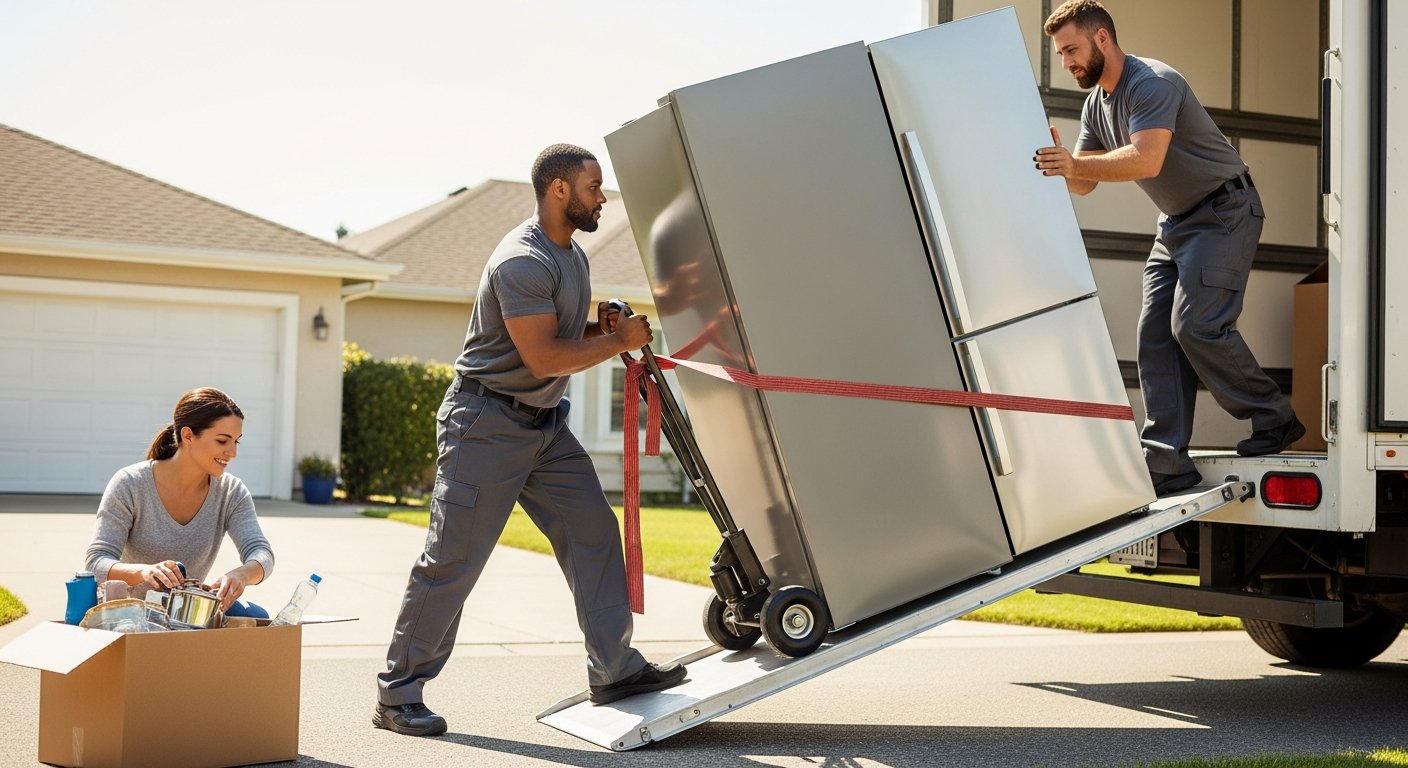
Moving a refrigerator, washing machine, or oven is one of the most stressful parts of any relocation. These items are heavy, awkward to grip, and filled with delicate components that can break if handled incorrectly. A single wrong move can result in a crushed foot, a damaged floor, or a costly repair bill. Learning how to move large appliances safely protects your belongings, your new home, and your own physical well-being.
Many people try to save money by moving these items themselves, only to realize that the risk of injury and damage is high. Professional movers have the equipment, training, and experience to handle these bulky items with ease. If you are planning a move, understanding the proper techniques is essential, whether you are doing it yourself or supervising a professional crew.
Why Moving Heavy Appliances Is Different
Large appliances are not just heavy. They have unique characteristics that make them more difficult to move than a standard piece of furniture. A refrigerator has a sealed cooling system that can be ruined if the unit is tilted the wrong way. A washing machine has a heavy drum that can cause the machine to become unbalanced. A gas stove has connections that must be disconnected safely to prevent leaks.
These complexities mean you cannot simply push these items across the floor. You need a clear plan, the right tools, and an understanding of the specific requirements for each type of appliance. Failing to prepare can lead to serious problems, such as a broken water line that floods your home or a scratched hardwood floor that costs hundreds of dollars to refinish.
This is where the value of professional help becomes clear. A licensed moving company brings the correct equipment, from appliance dollies to moving straps, and has the knowledge to handle every type of heavy household item. For more complex items like a pool table, which requires special disassembly, professional expertise is even more critical. You can see our detailed approach in our guide on how to move a pool table safely, which highlights the importance of specialized handling for delicate, heavy objects.
Essential Tools and Equipment for the Job
Before you attempt to move any large appliance, you need to gather the right supplies. Using the wrong equipment is a leading cause of injuries and property damage. At a minimum, you should have the following items on hand.
- Appliance Dolly: A standard hand truck is not sufficient. An appliance dolly has a wide, padded belt that helps secure the load without damaging the unit’s exterior.
- Furniture Sliders: These are placed under the feet of the appliance to allow you to slide it easily across hard floors without scratching them. They are less useful on thick carpet.
- Moving Straps and Ropes: Ratchet straps are ideal for securing the appliance to the dolly. Ropes can also work but require proper knot-tying skills to be safe.
- Basic Tool Kit: You will need screwdrivers, wrenches, and pliers to disconnect hoses, cords, and other attachments.
- Protective Gear: Wear heavy-duty work gloves to protect your hands and steel-toed boots to protect your feet from a dropped appliance.
Investing in or renting this equipment is a small price to pay compared to the cost of a hospital visit or replacing a damaged appliance. Professional movers already own all this gear, which is another reason why hiring them is often the most efficient and safe choice.
Once you have your tools, you must prepare the path. Clear a route from the appliance to the exit, removing any rugs, furniture, or obstacles. Measure the doorways and hallways to ensure the appliance will fit through. If you have to navigate stairs, you will need at least two strong people, and possibly a third to spot you.
Preparing Your Appliances for the Move
Preparation is a multi-step process that begins a day or two before the actual move. It is not something you should rush on moving day itself. Proper preparation ensures the appliance is safe to transport and will work correctly once it reaches your new home.
Disconnecting Utilities and Cords
The first step is to safely disconnect the appliance from its power and water sources. For a refrigerator, you should unplug it and turn off the water supply line if it has an ice maker. For a washing machine, you need to disconnect the hot and cold water hoses and drain any remaining water from them. For a gas stove, you must turn off the gas valve at the wall and disconnect the flexible gas line. This is a job that may require a professional if you are not comfortable working with gas lines.
After disconnecting, you should secure all cords and hoses. Use zip ties or tape to fasten them to the back of the appliance so they do not dangle and catch on doorways. For washing machines, you must also drain the machine completely to avoid water spilling during transport. Many machines have a small drain filter or hose that you can use to remove residual water.
Securing Internal Components
Moving a refrigerator or freezer requires special attention to the internal components. The glass shelves can slide and break, and the doors can swing open. You should remove all loose items from the shelves and secure them in boxes. If possible, tape the shelves in place or remove them and wrap them individually. The doors should be taped shut with strong packing tape or secured with moving straps.
For washing machines and dryers, you must secure the internal drum if possible. Many modern washing machines come with shipping bolts that need to be reinstalled before moving. These bolts hold the drum in place and prevent it from damaging the machine’s suspension system during transit. If you no longer have the original bolts, you can purchase a kit from a hardware store. This step is critical; moving a washing machine without securing the drum can cause permanent damage.
Step-by-Step Lifting and Transport Guide
Now that everything is prepared, it is time to move the appliance. This is the most physically demanding part of the process. Always lift with your legs, not your back, and never try to lift an appliance alone. A standard refrigerator can weigh over 300 pounds, making it impossible for one person to handle safely.
Follow these steps for a successful move:
- Position the Dolly: Tilt the appliance slightly and slide the dolly underneath it. Make sure the dolly is centered to balance the weight properly.
- Strap the Appliance: Use the ratchet straps to secure the appliance firmly to the dolly. The straps should be tight enough to prevent any movement but not so tight that they dent the appliance’s exterior.
- Tilt and Roll: With one person on each side, carefully tilt the dolly back until the weight is balanced on the wheels. One person should pull from the front, and the other should push from the back, keeping the appliance upright.
- Navigate Obstacles: When going over a threshold or down a step, tilt the dolly slightly so the wheels can clear the obstacle. When going through a doorway, check the clearance on both sides to avoid scraping the appliance.
- Loading the Truck: When you reach the moving truck, position the appliance against the wall of the truck and secure it with additional straps to prevent it from shifting during transit.
- Not Defrosting the Freezer: Moving a freezer with ice inside can cause the cooling unit to be damaged. You must unplug it and let it defrost completely for 24 hours before moving.
- Using the Wrong Dolly: A regular hand truck with small wheels is not designed for heavy appliances. It can tip over easily, causing damage and injury.
- Dragging Instead of Lifting: Dragging an appliance across the floor can rip up carpet, scratch hardwood, and damage the appliance’s feet. Always use a dolly or sliders.
- Forgetting to Secure the Door: An unsecured refrigerator door can swing open and hit a wall or a person. Always tape or strap the doors shut.
If you are moving the appliance up or down stairs, the process is more complex and dangerous. The dolly should be tilted back so the weight is on the wheels, and the person at the top should pull while the person at the bottom pushes. Never attempt to carry an appliance on your back up a staircase. The risk of falling is simply too high.
Common Mistakes to Avoid
Even with the best intentions, people often make mistakes when moving large appliances. Being aware of these common pitfalls can save you from a major headache.
Avoiding these mistakes is much easier when you have a professional crew. They have moved dozens of refrigerators and washing machines and know how to handle every situation. They also carry insurance, so if something is damaged, you are not responsible for the full replacement cost.
When to Hire Professional Movers
While it is possible to move small appliances yourself, there are many scenarios where hiring a professional is the smarter choice. If you are moving a large, heavy item like a refrigerator with an ice maker, a washer and dryer set, or a gas stove, the complexity and risk increase significantly. If you have to navigate multiple flights of stairs, narrow hallways, or long distances to the moving truck, the physical strain becomes immense.
Professional moving companies, like those you can find through Moving Perfect, have the specialized equipment and training to handle these challenges safely. They are licensed and bonded, which means they are accountable for the safety of your belongings. By getting a moving quote, you can compare the cost of professional help against the potential cost of an injury or a damaged appliance. In many cases, the peace of mind is worth the expense.
When you hire a professional crew, they will handle all the heavy lifting, from disconnecting appliances to loading them onto the truck. They will also use the correct techniques to protect your floors, walls, and doorways. This allows you to focus on other aspects of your move, reducing your overall stress level.
Setting Up Your Appliances in Your New Home
The job is not done once the appliance is in the new house. There are a few important steps to follow before you can plug everything back in. First, check the appliance for any damage that may have occurred during the move. If you notice any dents or scratches, document them with photos immediately, especially if you are using a professional moving service.
For a washing machine, you must remove the shipping bolts before using it. For a refrigerator, you should wait at least two to three hours after plugging it in before placing food inside. This allows the cooling system to stabilize. For a gas stove, you must reconnect the gas line and check for leaks with a soap-and-water solution. If you see bubbles, there is a leak, and you should call a professional immediately.
Take your time during the installation process. Rushing can lead to mistakes that are just as costly as those made during the move itself. Ensure the appliances are level and stable before you use them. This will prevent unnecessary wear and tear and ensure they operate efficiently for years to come.
Ultimately, moving large appliances safely is about preparation, technique, and knowing your own limits. Whether you choose to do it yourself or hire a professional, prioritizing safety will ensure that you, your family, and your valuable household items arrive at your new home without incident.