

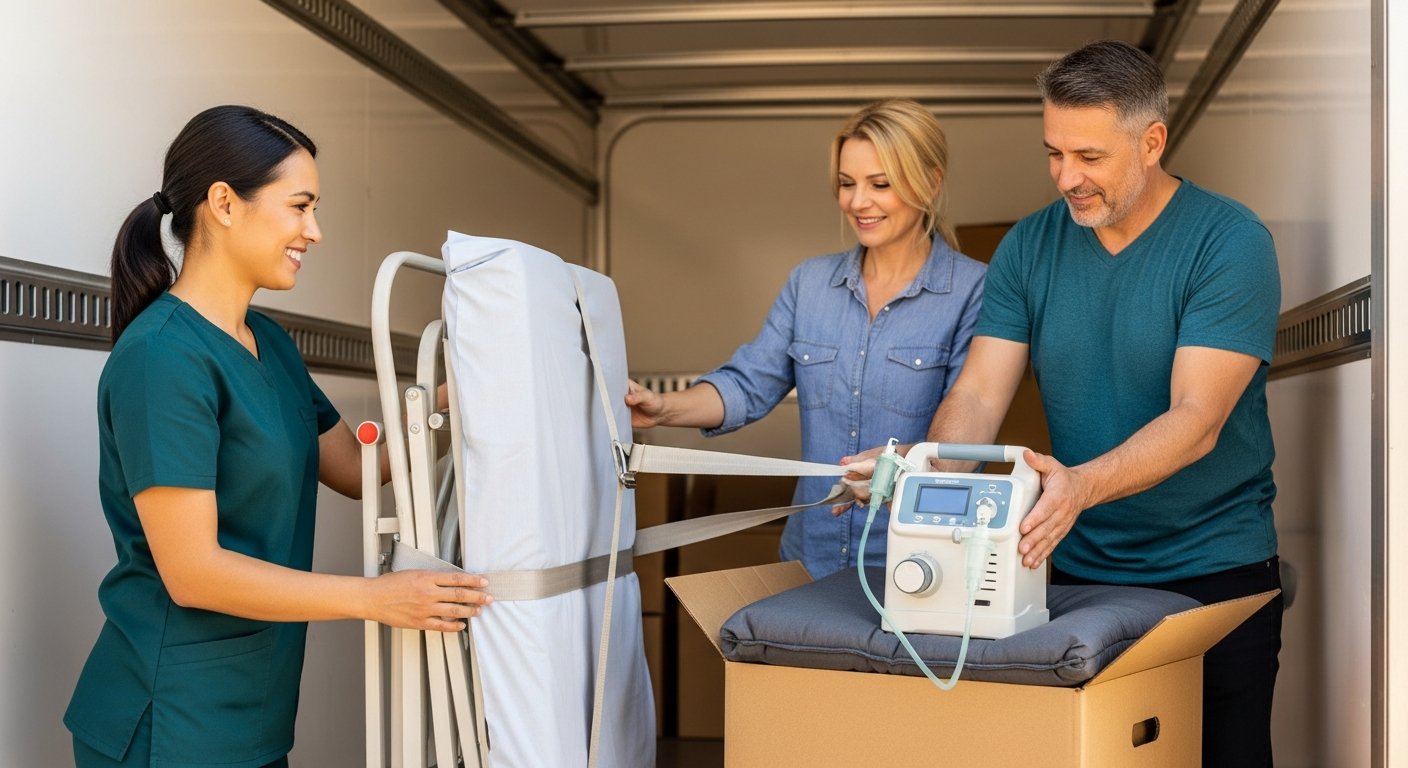
When a loved one relies on a hospital bed, oxygen concentrator, or power wheelchair, moving day becomes more than just a logistical challenge. It becomes a matter of safety, continuity of care, and financial protection. A single misstep during transit can lead to thousands of dollars in repairs or replacement costs. This moving medical equipment guide for patients and caregivers provides the step-by-step plan you need to relocate sensitive devices without disruption, damage, or surprise expenses. Whether you are moving across town or across the country, the right preparation and the right moving team make all the difference.
Why Moving Medical Equipment Requires Special Planning
Medical equipment is not like furniture or kitchenware. Many devices are sensitive to shock, temperature changes, and humidity. A portable ventilator, for example, contains delicate electronics that can malfunction if jarred. A hospital bed has moving parts that must be secured in a specific position before transport. Patients who depend on continuous positive airway pressure (CPAP) machines or feeding pumps need those devices ready for use the moment they arrive at their new home.
Caregivers often underestimate the time and expertise needed to pack, disassemble, and reassemble medical gear. Rushing the process can lead to broken parts or lost accessories. Furthermore, standard moving insurance may not cover the full replacement cost of specialized equipment. This is where a dedicated moving medical equipment guide becomes invaluable. It helps you avoid common pitfalls and ensures that the movers you hire are equipped to handle fragile, high-value items.
Before you schedule a moving company, take an inventory of every piece of medical equipment you plan to move. Include the make, model, serial number, and approximate replacement value. This list serves as the foundation for your packing plan and your insurance discussion.
Step-by-Step Packing for Different Types of Medical Devices
Not all medical equipment is packed the same way. Some items must be cleaned and sanitized before packing. Others require temperature-controlled storage. Below is a breakdown of packing strategies for the most common categories of medical devices. Follow these steps to prevent damage and keep everything organized.
Mobility Aids: Wheelchairs, Walkers, and Scooters
Mobility aids are often the most frequently used devices, so they should be packed last and unpacked first. For power wheelchairs and scooters, remove the battery and pack it separately in a ventilated plastic container. Batteries can leak or spark if terminals are not taped. Wrap the frame in moving blankets or bubble wrap, paying extra attention to joystick controllers and footrests. Label the box “Fragile – Mobility Aid” on multiple sides.
For manual wheelchairs, fold the chair and secure the crossbars with zip ties so it does not open during transit. Remove any cushions or removable armrests and pack them in a separate bag. Walkers and rollators can be placed in large moving boxes packed with soft packing paper to prevent scratching.
Electronic Devices: Ventilators, CPAP Machines, and Monitors
Electronic medical devices demand the highest level of care. Always use the original packaging if you still have it. If not, wrap each device in antistatic bubble wrap and place it in a rigid box with at least two inches of cushioning on all sides. Do not pack heavy items on top of these boxes. Mark them clearly as “Medical Electronic Device – Keep Upright”.
Make sure you remove all tubes, masks, and cords and pack them in sealed plastic bags. Tuck those bags into the same box but separated by foam sheets. For CPAP machines, drain any water from the humidifier chamber before packing. Plan to keep a separate go-bag with the devices you will need on moving day and the first night in your new home.
Hospital Beds and Lift Systems
Hospital beds are heavy and awkward. Before the movers arrive, lower the bed to its lowest position, raise the head of the bed fully (unless instructions say otherwise), and remove the mattress. Some beds require partial disassembly: remove headboards, footboards, and side rails. Keep all screws and bolts in labeled plastic bags taped to the frame. Many professional movers are trained to take apart and reassemble hospital beds, but it is wise to confirm this capability when you book. If you are using a service like Moving Perfect to connect with licensed and bonded movers, ask specifically about experience with medical bed transport.
Insurance and Valuation Coverage for Medical Equipment
Standard moving insurance options often include released value protection, which is minimal coverage at no extra cost, and full value protection, which costs more but covers repair or replacement of damaged items. For medical equipment, full value protection is almost always the right choice. The replacement cost of a power wheelchair or ventilator can exceed ten thousand dollars. Relying on basic coverage leaves you financially exposed.
When you compare moving quotes through Moving Perfect, ask each mover to provide a written explanation of their valuation options for medical equipment. Some movers may require a separate rider or a declared value for high-cost devices. Provide them with your inventory list and the estimated replacement value. Get everything in writing.
If the equipment is rented or covered by a medical supply company, contact them before the move. Many suppliers will pick up their equipment and deliver new units to your new address. This can save you the risk of moving sensitive gear. For owned equipment, consider checking your homeowner’s or renter’s insurance policy to see if it covers damage during a move. Many standard policies exclude moving damage, so supplemental coverage from the mover may be necessary.
Preparing the Patient and the Home Environment
A successful move is not only about the equipment. The patient who depends on that equipment must also be prepared. Moving day can be exhausting and stressful, especially for someone with a chronic illness or limited mobility. Plan the move around the patient’s medical schedule. Do not schedule the move on a day when the patient has a doctor’s appointment or a treatment session.
Pack a medical essentials box that stays with you in the car, not on the moving truck. This box should include all medications, prescriptions, insurance cards, contact information for doctors and suppliers, and any backup medical supplies such as spare batteries, tubing, or sterile gloves. Also include snacks, water, and a change of clothes. The medical essentials box should be labeled clearly and kept accessible throughout the move.
At the destination, prepare the patient’s room first. Set up the hospital bed, position the oxygen concentrator, and plug in the CPAP machine before unpacking anything else. This reduces anxiety and ensures that medical routines can resume immediately. If you are moving to a new city, use resources like our guide on car registration after moving to handle vehicle-related tasks, but prioritize health and equipment setup before administrative chores.
Choosing the Right Mover for Medical Equipment
Not every moving company has experience with medical equipment. When you search for movers through Moving Perfect, you can specify that you need to move medical devices. Licensed and bonded movers who handle medical equipment know how to disassemble complex beds, secure oxygen tanks according to safety regulations, and pad expensive electronics. They also carry the appropriate insurance to cover specialized items.
Ask the following questions when vetting movers: Do you have experience moving hospital beds and power wheelchairs? What packing materials do you recommend for electronic medical devices? Do you offer full value protection for items over a certain dollar amount? How do you handle items that need to be reassembled at the destination? Will you move oxygen tanks or other compressed gas cylinders? (Many movers have policies against moving certain hazardous materials, so confirm this early.)
A professional mover will provide clear answers and may offer a walkthrough of your home to see the equipment in person. Avoid any company that gives a vague response or suggests that moving medical equipment is no different than moving a sofa. It is distinctly different, and the consequences of damage are far greater.
Key Documents and Communication Checklist
Caregivers often handle the logistics, but the patient should be involved in decisions about which items move and which stay. Create a communication plan that includes the patient, the caregiver, the moving company, and any medical supply vendors. Keep everyone informed of the timeline and expectations.
Here are the essential documents you need before moving day:
- Inventory list with serial numbers and estimated values for all medical equipment.
- Copy of the moving contract and insurance valuation paperwork.
- Doctor’s letter or prescription for any equipment that is rented or prescribed, in case you need to prove medical necessity.
- Contact details for the equipment manufacturer or supplier for troubleshooting and warranty issues.
- Emergency plan: know the nearest hospital and urgent care center at the new location.
Having these documents organized in a single folder saves time and reduces stress. Share a copy with the moving crew so they understand the importance of handling certain boxes with extra care.
Common Mistakes to Avoid When Moving Medical Equipment
Experience shows that even well-intentioned caregivers make preventable errors. One frequent mistake is failing to test equipment after it arrives. Before the movers leave your new home, test every electronic device. Plug in the CPAP, turn on the ventilator, and check that the hospital bed raises and lowers properly. If something is damaged, you can note it on the mover’s paperwork immediately.
Another mistake is packing small components like remote controls, charger cords, and oxygen flow meters in the general moving boxes. Always keep these accessories with the device they belong to. Pack them in a labeled bag and tape that bag to the device itself. Missing a single power cord can render an expensive machine useless until you find it.
Do not assume that all medical equipment is too heavy to move yourself. Some items, like lightweight scooters or foldable wheelchairs, can be transported in a personal vehicle. However, full-size hospital beds and lift systems should always be handled by professionals. Attempting to move them without the right tools and training can damage the equipment or cause personal injury. Moving Perfect can help you find qualified movers who have the equipment and expertise for heavy medical items.
Finally, do not overlook the emotional impact on the patient. Moving is a major life transition, and patients who rely on medical equipment may feel vulnerable. Involve them in packing decisions, let them handle their own devices if they are able, and celebrate small milestones like getting the bedroom set up. A positive attitude from the caregiver can make a significant difference in how the patient experiences the move.
By following this moving medical equipment guide for patients and caregivers, you can protect expensive devices, maintain continuity of care, and reduce the overall stress of relocation. The key is to start early, choose the right mover, and keep the patient’s needs at the center of every decision. With careful planning and professional help, your move can be safe and successful.