

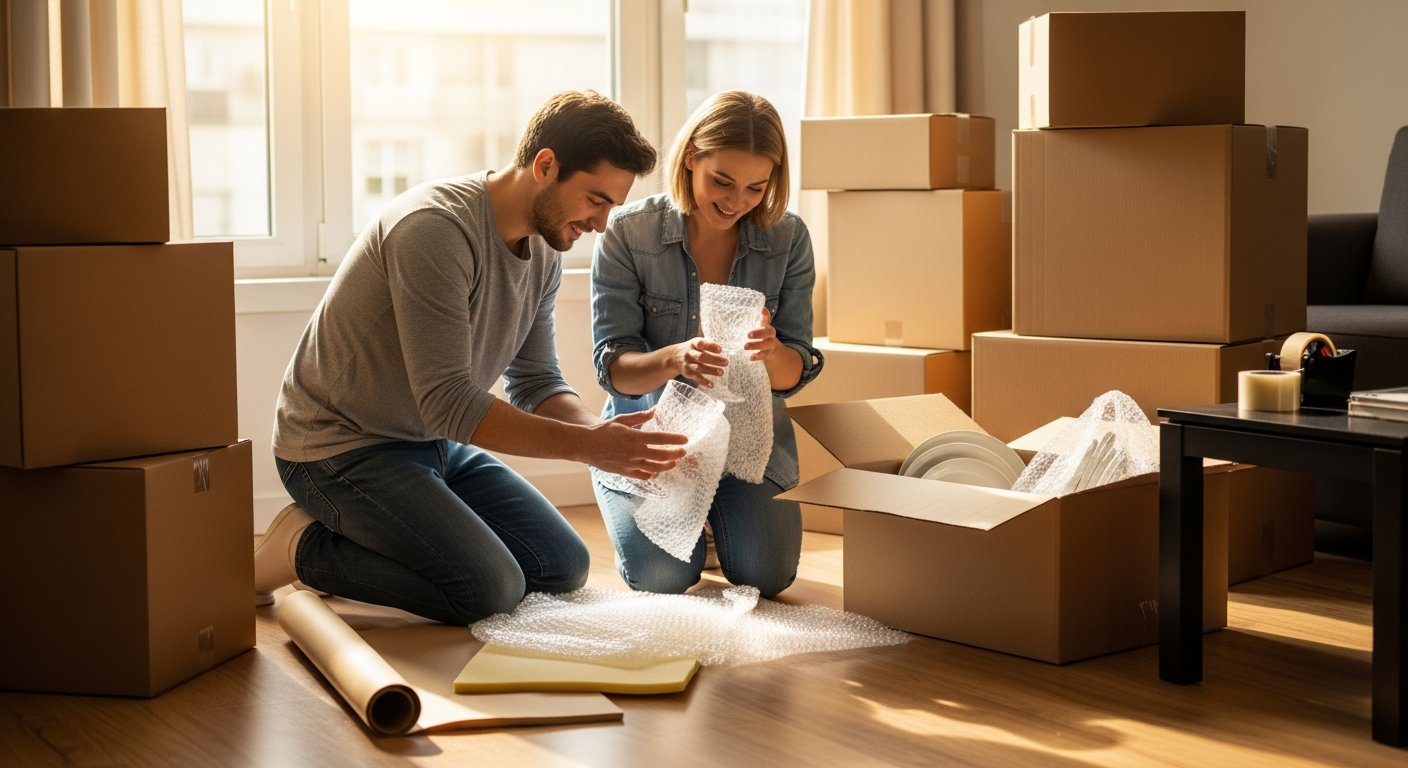
You have spent years collecting fine china, crystal stemware, and treasured family heirlooms. Now you face the daunting task of relocating them without a single crack. Every mover has a story about the one box that did not survive the trip. The good news is that with the right techniques, you can protect even the most delicate possessions. This guide walks you through the professional methods for packing breakable items, from selecting the best materials to loading boxes so they survive the journey.
Gather the Right Packing Supplies
Before you wrap a single plate, you need the proper tools. Using the wrong materials is the fastest way to end up with broken belongings. Professional movers rely on a few key supplies that provide cushioning and structural support. Start with double-walled cardboard boxes in small and medium sizes. Large boxes invite overloading and collapse under heavy weight. Small boxes keep items snug and prevent shifting during transit.
You also need quality cushioning materials. Do not rely on newspaper alone, as the ink can transfer onto your items and newsprint offers limited shock absorption. Instead, invest in:
- Bubble wrap: Use this for wrapping individual items, especially glassware and electronics. The air pockets absorb impacts that would otherwise transfer to the object.
- Kraft paper: This unprinted paper works well for wrapping dishes and filling gaps. It is strong, clean, and provides a good grip between layers.
- Packing peanuts or foam sheets: Use these as void fill at the bottom and top of boxes to prevent movement. Foam sheets are ideal for layering between stacked plates.
- Dish packs: These are specially designed boxes with reinforced walls and dividers for plates and stemware. They cost a bit more but offer superior protection.
Once you have your supplies, set up a clean packing station with a large table or clean floor space. Having everything organized before you start will save time and reduce errors. For additional guidance on selecting the best materials, see our article on pack fragile items for moving pro safety tips.
Wrap Each Item Individually
Wrapping each breakable item separately is the single most important step in preventing damage. Do not stack multiple items together without cushioning between them. Start with a sheet of kraft paper or a layer of bubble wrap large enough to cover the object completely. Place the item in the center of the material, then fold the edges over and secure them with packing tape.
For glassware and stemware, use a technique called the twist-and-tuck method. Lay a square of bubble wrap on the table, set the glass upside down in the center, and pull the corners up around the bowl. Twist the excess material at the base and tuck it under the bottom. This creates a padded cocoon that protects both the rim and the stem. For plates, wrap each one individually with a layer of paper or bubble wrap, then stack them vertically in the box rather than flat. Vertical stacking distributes pressure evenly and reduces the risk of cracking.
Special Handling for Heirlooms and Antiques
Items with sentimental or monetary value deserve extra attention. Antique vases, porcelain figurines, and framed art require additional layers of protection. Wrap these pieces first in acid-free tissue paper to prevent chemical reactions with the packing materials, then follow with a thick layer of bubble wrap. Use foam corner protectors on items with protruding parts like handles or spouts. Place these special items in their own box with plenty of cushioning all around, and label the box clearly so movers know to handle it with extra care.
Use the Right Box Packing Technique
How you arrange items inside the box matters as much as how you wrap them. Begin by lining the bottom of the box with a generous layer of crumpled paper or packing peanuts. This creates a shock-absorbing base. Place the heaviest items at the bottom and lighter items on top. For dish packs with dividers, insert each wrapped plate or glass into its own slot. If you are using a standard box, place items in a single layer with cushioning between each piece. Fill every gap with paper or peanuts so nothing can shift.
When the box is full, add a final layer of cushioning on top. The box should be full enough that the lid closes without bulging. If you can feel movement when you shake the box gently, add more fill. Seal the box with strong packing tape, using the H-method: one strip down the center seam and one strip across each end. This reinforces the bottom and prevents the box from bursting open during lifting. For extra security, apply tape along all seams.
Label Boxes Clearly and Strategically
Proper labeling helps everyone on moving day treat your breakables with the respect they deserve. Write “FRAGILE” in large letters on the top and all four sides of each box. Use a permanent marker so the label does not smudge or fade. Include a brief description of the contents, such as “Kitchen Glassware” or “Living Room Figurines,” so you know which room each box belongs to.
Consider using color-coded stickers or tape for fragile boxes. Red tape or bright orange stickers immediately catch the eye and signal caution. You can also number each fragile box and create a master inventory list. This makes it easier to check that everything arrived safely and helps with unpacking. Instruct your movers to load fragile boxes last and unload them first so they never end up at the bottom of a stack.
Load the Truck Like a Professional
Even the best-packed boxes can break if they are loaded incorrectly. The way a moving truck is packed determines how much items shift during transit. Fragile boxes should never go on the bottom of a stack. Place them on top of heavy furniture or solid boxes of books. Use furniture pads or blankets between layers to add cushioning. If you are hiring professional movers, communicate clearly which boxes contain breakables. Most licensed and bonded movers will handle these boxes with extra care and place them in a secure position.
When you use a service like Moving Perfect to find professional movers, you gain the advantage of experienced crews who know how to pack a truck efficiently. They will distribute weight evenly and strap down items to prevent movement. This reduces the risk of boxes toppling or sliding during turns and stops. If you are loading the truck yourself, take extra time to secure each layer and avoid stacking fragile boxes more than two high.
Unpack With Care and Inspect Immediately
When you arrive at your new home, unpack fragile items as soon as possible. Do not let boxes sit in the sun or in damp areas, as extreme temperatures can weaken packing materials. Open each box on a clean, flat surface and remove items one at a time. Inspect each piece for chips, cracks, or other damage. If you find damage, take a photo immediately and document it for insurance purposes.
Have a designated spot for each category of breakable. Lay out a table with soft padding where you can set glasses and plates as you unwrap them. This prevents accidents that can happen when you place items on hard countertops. Keep your packing supplies nearby so you can rewrap anything that needs to be stored or moved to another room.
Consider Insurance for Peace of Mind
No matter how carefully you pack, accidents can happen. A sudden stop, a dropped box, or an unexpected bump can cause damage. Moving insurance provides a safety net that covers the replacement value of your belongings. Many moving companies offer basic coverage, but it often pays only a fraction of the item’s value. For valuable antiques or electronics, consider purchasing additional valuation coverage or a separate moving insurance policy. This small investment can save you thousands of dollars if the worst happens.
When you book movers through Moving Perfect, you can discuss insurance options with the company directly. Licensed and bonded movers are required to offer certain levels of protection, but you should always ask about the details before moving day. Knowing your items are insured allows you to focus on the excitement of settling into your new home rather than worrying about potential damage.
Packing breakable items for a move does not have to be a source of stress. With the right supplies, careful wrapping, and smart loading techniques, you can get your treasured possessions to your new home in perfect condition. Take your time, follow these steps, and you will be unpacking your china cabinet with a smile.